

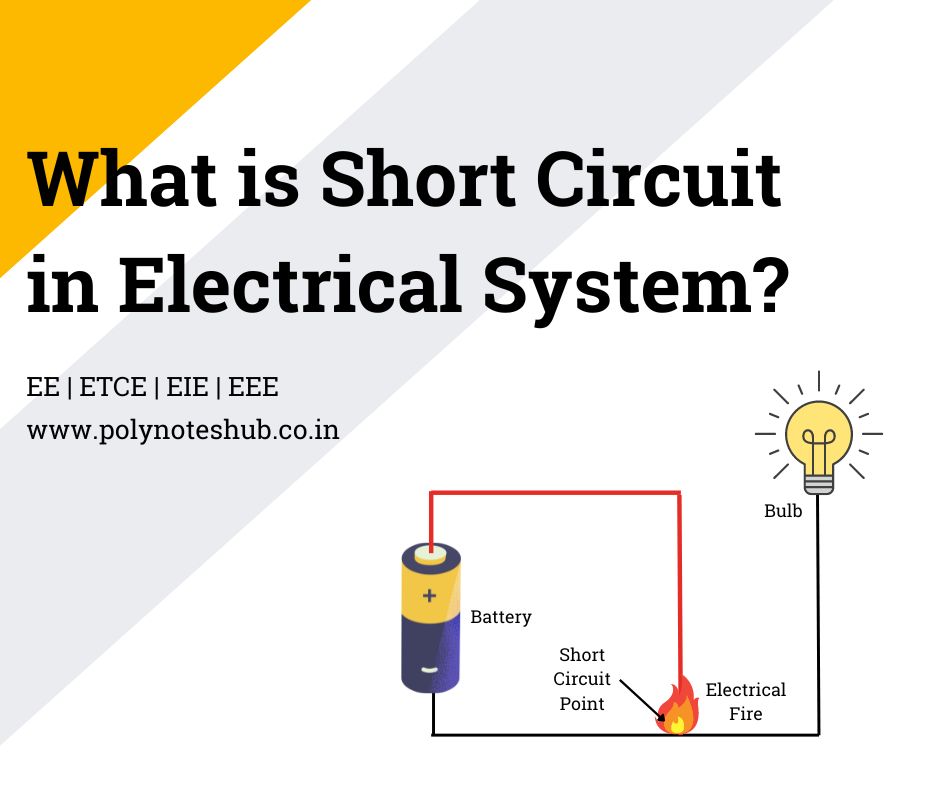
In this note, we are going to learn about a topic “What is Short Circuit?“, and also about its damages and examples as well. Welcome to Poly Notes Hub, a leading destination for polytechnic notes for diploma engineering students.
Author Name: Arun Paul.
What is Short Circuit?
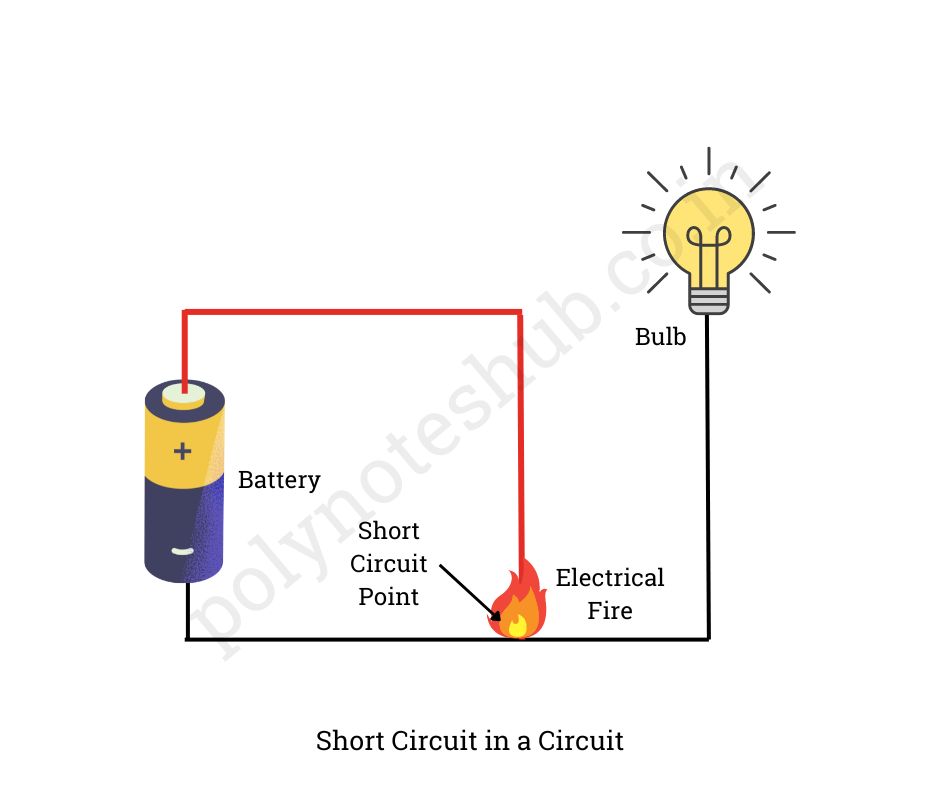
A short circuit in electrical engineering occurs when an unexpected connection is made between two points in a circuit, resulting in a path with very low resistance. This results in high current flow, which can damage components or cause a circuit breaker to trip, cutting off the flow of energy.
Damages of Short Circuit
Below we listed some short circuit damages in electrical system –
- Component Damage: Excessive current flow can harm electrical components such as wires, switches, circuit breakers, fuses, and devices linked to the circuit.
- Fire Hazard: Electrical fires may result from the melting or burning of insulating materials due to the high current flow’s heat.
- Equipment Failure: Equipment linked to the circuit may malfunction or completely fail as a result of short circuits, causing downtime and maybe monetary losses.
- Electrocution Risk: In extreme circumstances, short circuits can produce hazardous conditions that raise the risk of electric shock or electrocution to individuals close.
- Damage to Power Supply: Short circuits can overload power supplies, transformers, and generators, thereby causing damage and disrupting power distribution.
Examples of Short Circuit
Here is some short circuit examples –
- Damaged insulation causing wires to touch.
- Too many devices plugged in, overloading the circuit.
- Internal faults in appliances or devices.
- Improperly secured electrical joints etc.