
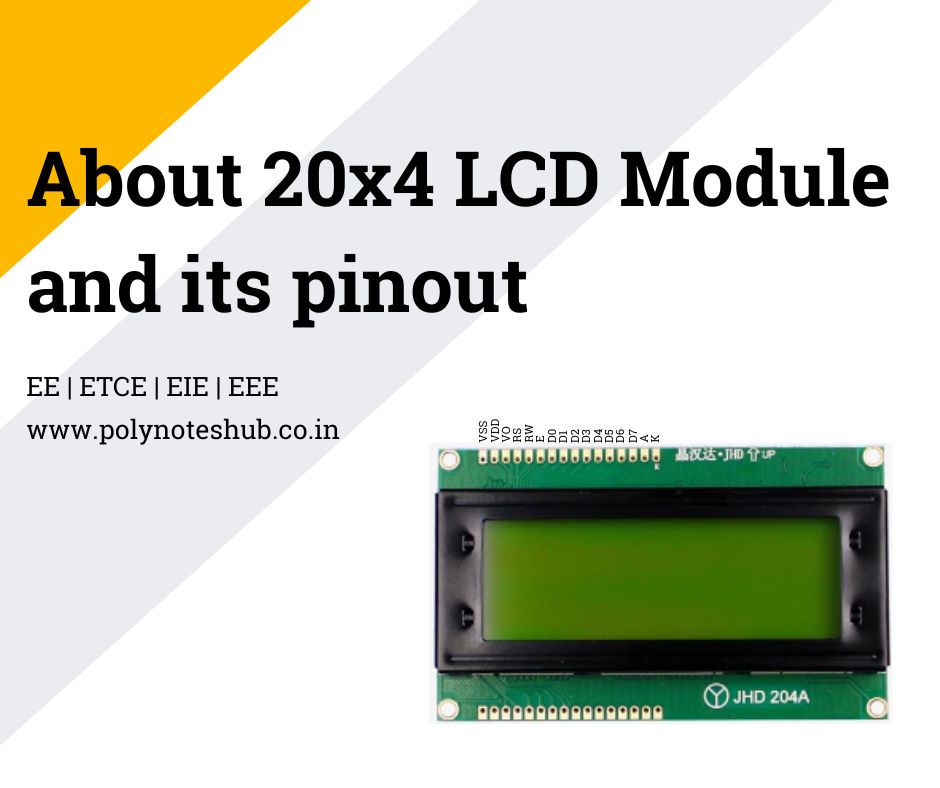
In this note, we are going to learn about 20×4 LCD Display or LCD Module and about its specifications and pin details. Welcome to Poly Notes Hub, a leading destination for polytechnic notes for diploma and degree engineering students.
Author Name: Arun Paul.
What is 20×4 LCD Display?
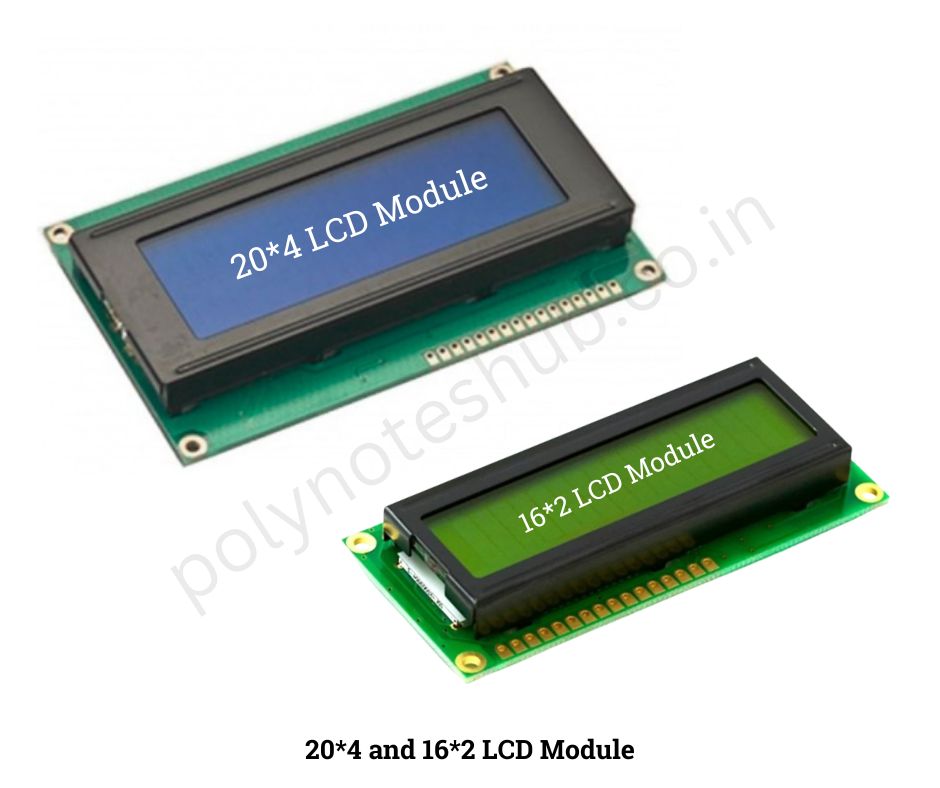
A 20×4 LCD Display is a liquid crystal display (LCD) module having a display area of 20 characters in width and 4 lines in height. These modules are widely used in electrical devices to show text, numbers, and symbols. They often have a simple interface that allows people to interact with the device and examine crucial data.
Specifications of 20×4 LCD Display
Here we listed the specifications of 20×4 LCD Module –
- Display Size: 20 characters per line over four lines.
- Character size: It has typically 5×8 dots per character.
- Display Type: Typically uses reflective LCD technology.
- Interface: Typically supports parallel or serial communication protocols such as UART, SPI, and I2C.
- Voltage: The operating voltage normally ranges from 3.3 to 5 volts.
- Backlight: An LED backlight may be included to improve visibility.
- Controller: Uses an integrated controller chip, such as the Hitachi HD44780 or comparable.
- Operating Temperature: Generally works between -20°C and +70°C.
- Physical measurements: Vary, but they are usually around 98mm x 60mm x 12mm.
- Compatibility: Compatible with a variety of microcontrollers and development boards, including Arduino and Raspberry Pi.
20×4 LCD Display Pinout
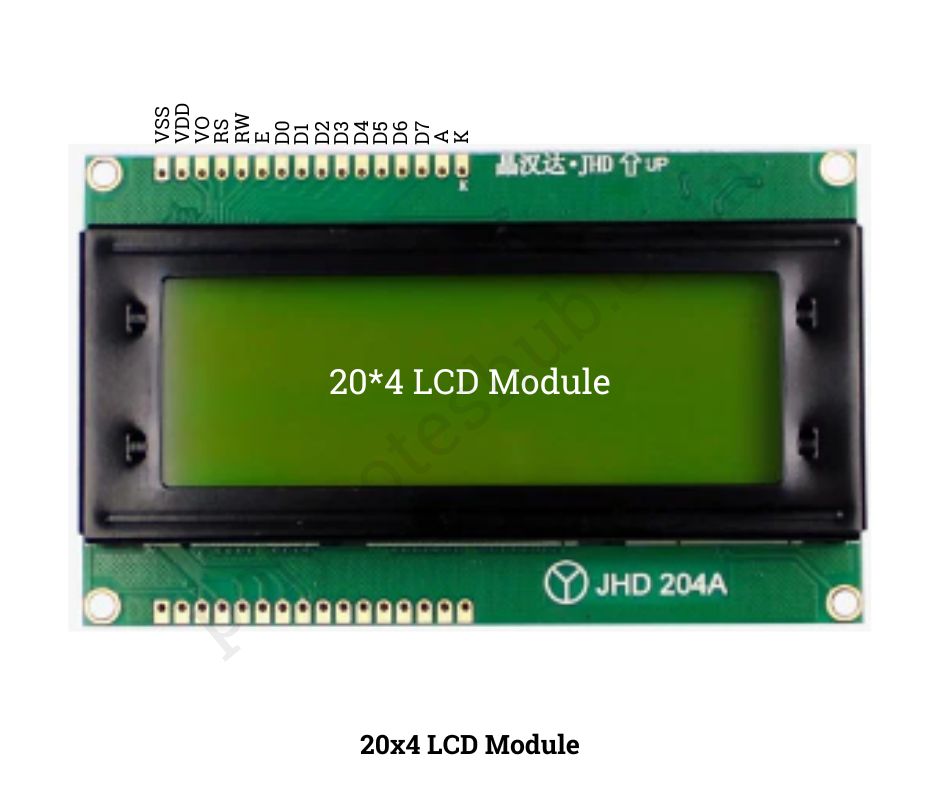
Below we listed the pins of 20×4 LCD module and their function –
- VSS: Ground (GND).
- VDD: The power supply voltage (VCC).
- VO: Contrast adjustment (connects to a potentiometer for adjustment)
- RS: Register Select (RS) – Switches between command and data modes
- RW: Read/write (R/W) – Chooses between read and write modes (typically connected to ground for write-only operation).
- E: Enable signal (EN) – Enables data read and write.
- D0-D7: Data lines for 8-bit mode transmission (D0 is the least significant bit, whereas D7 is the most significant bit).
- A: Backlight anode (positive terminal, usually linked to a resistor and subsequently to VCC).
- K: backlight cathode (negative terminal, connected to ground).