

In this note, we are going to know about Color Addition and Subtraction (RGB and CMYK). Welcome to Poly Notes Hub, a leading destination for engineering notes for diploma and degree engineering students.
Author Name: Arun Paul.
Color Addition and Subtraction
The three primary colors are Red, Green, and Blue. These three colors in different proportions produce a wide range of colors. Mixing of colors can be take place in two ways –
- Additive Color Mixing
- Subtractive Color Mixing
The RGB (Red, Green, Blue) color model is based on additive color mixing, which creates multiple colors by altering the intensities of the three main colors. Its primary applications are screens, televisions, and digital displays.
1. Additive Color Mixing
- Starts with black (absence of light).
- Adding red, green, and blue light at different intensities creates other colors.
- Full intensity (255, 255, 255) of all three = White.
- Zero intensity (0, 0, 0) = Black
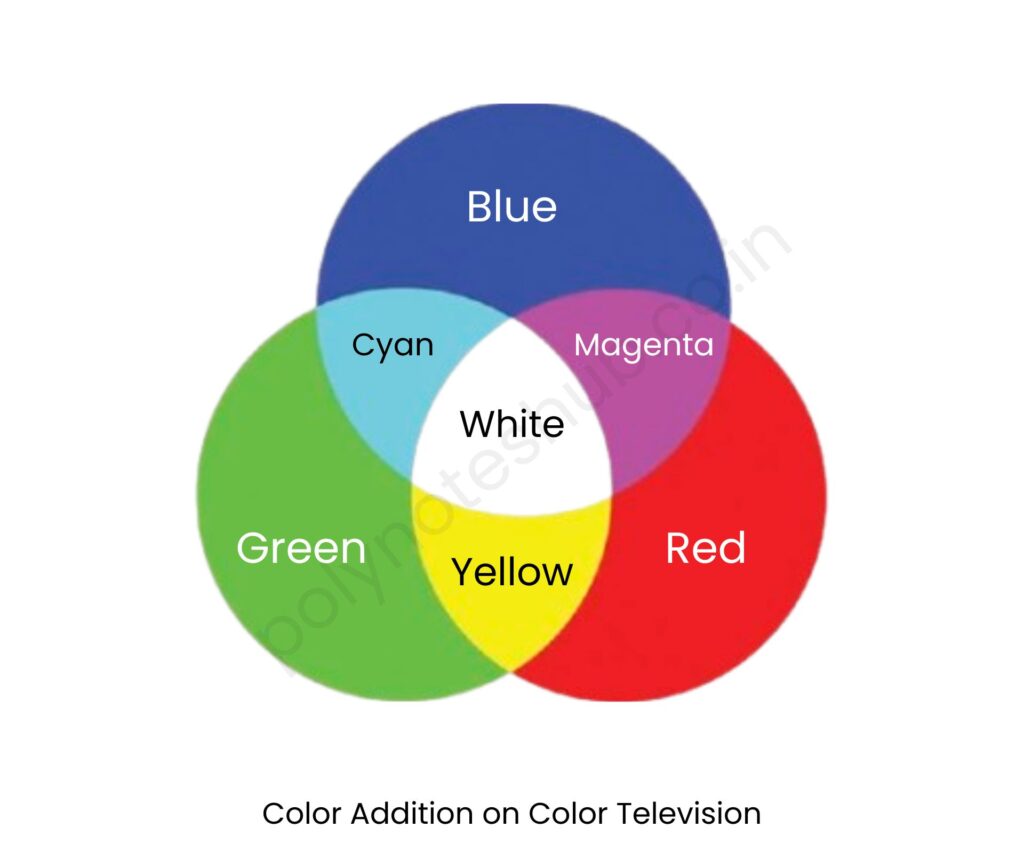
Here is the additive color combinations –
- Red + Green = Yellow
- Green + Blue = Cyan
- Blue + Red = Magenta
2. Subtractive Color Mixing (CMYK Model)
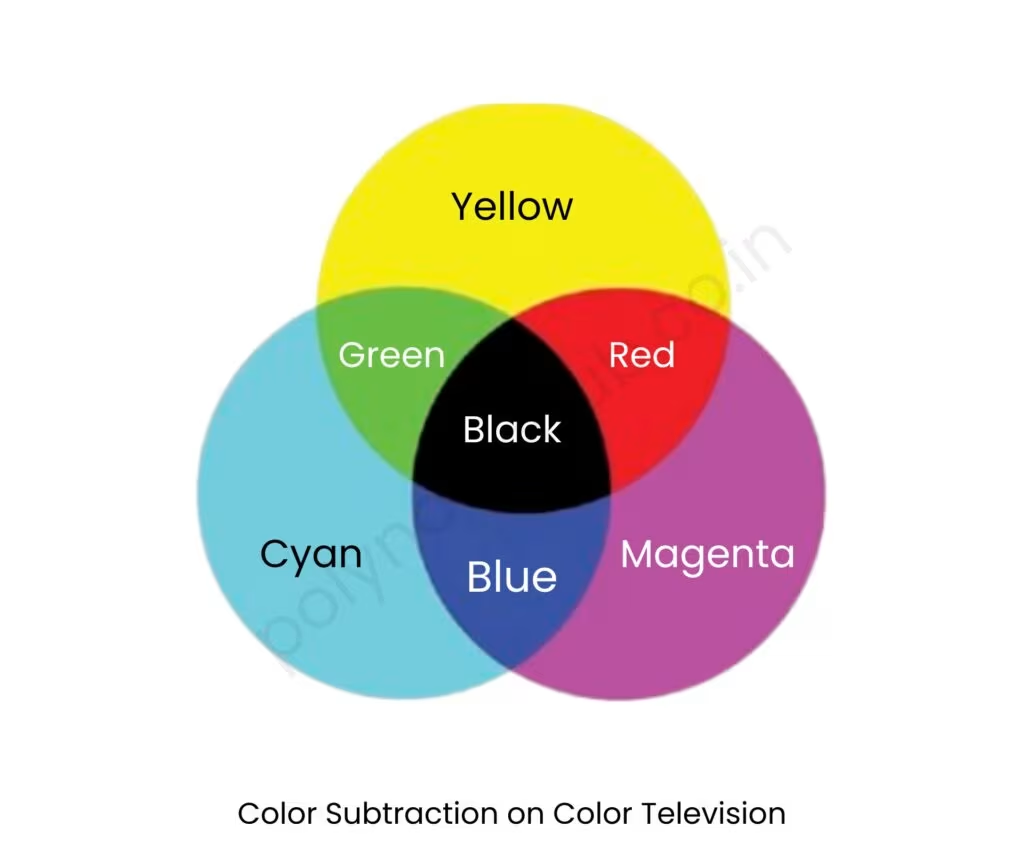
In contrast, subtractive color mixing is employed in printing (CMYK – Cyan, Magenta, Yellow, Black) and physical pigments.
- Starts with white (paper or light background).
- Colors are formed by subtracting wavelengths of light using pigments, inks, or dyes.
- Full combination of Cyan, Magenta, and Yellow = Black (in theory, but in practice, Black (K) is added for depth).
Here is the subtractive color combinations –
- Cyan + Magenta = Blue
- Magenta + Yellow = Red
- Yellow + Cyan = Green