
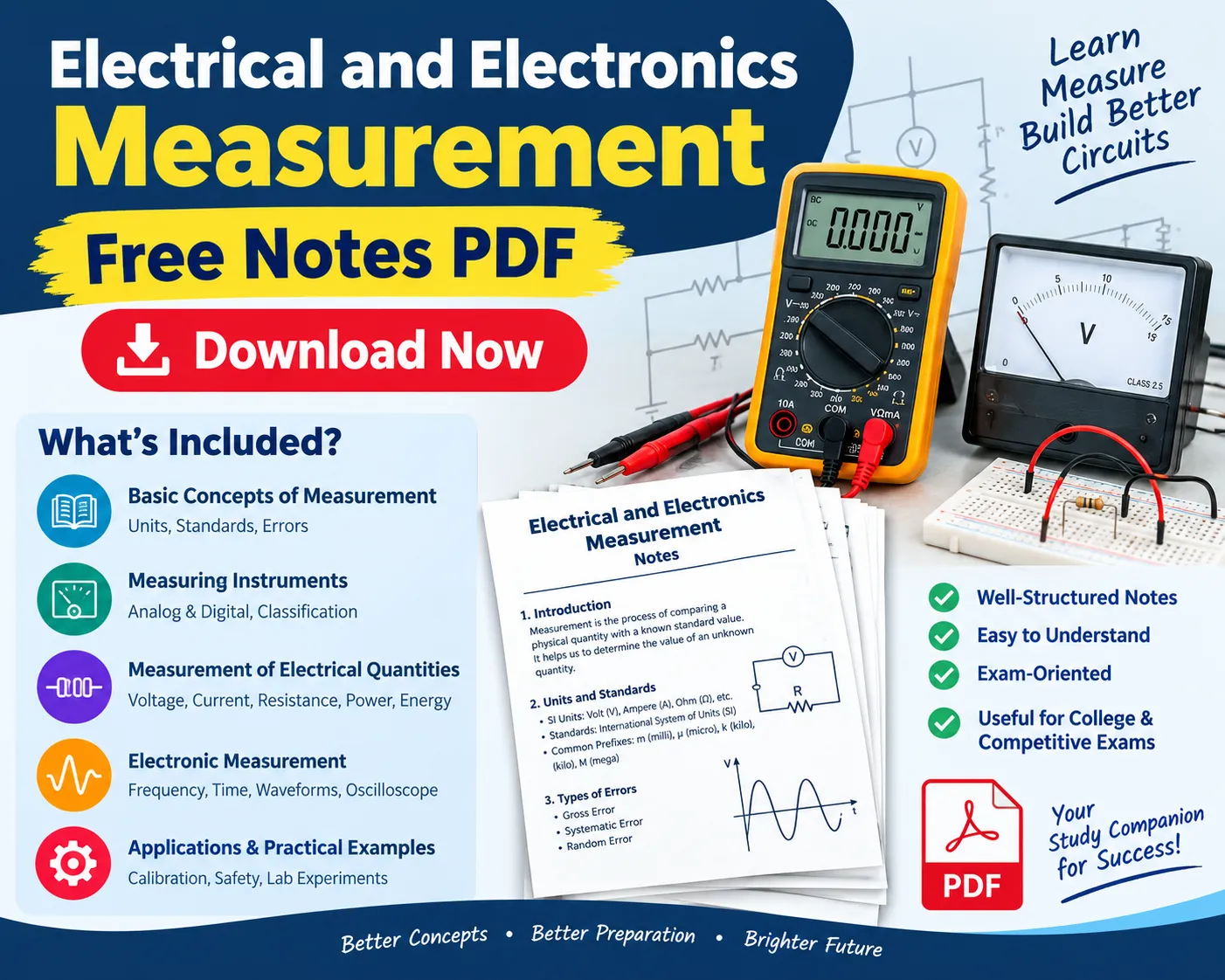
If you are searching for Electrical and Electronics Measurement Free Notes PDF, then you are in the right place. Welcome to Poly Notes Hub, a leading destination for Electrical Engineering or its related branches’ free notes PDFs.
Author Name: Arun Paul.
Download Electrical and Electronics Measurement Free Notes PDFs of 3rd Semester (Chapter-wise)
If you are an Electrical Engineering (EE) or Electronics Engineering student (or in related Polytechnic or Degree Engineering branches) and are looking for Free Notes, PDFs, handwritten notes, or Lecture Notes, we are here to help. We provide Free Study Materials for all semesters of all types of diploma and degree engineering branches.
Below, we have listed Free PDFs of each chapter of the Electrical and Electronics Measurement subject from Electrical or related branches, which is most important for the engineering syllabus.
Some Screenshots of Free Lecture Notes PDFs of Electrical and Electronics Measurement
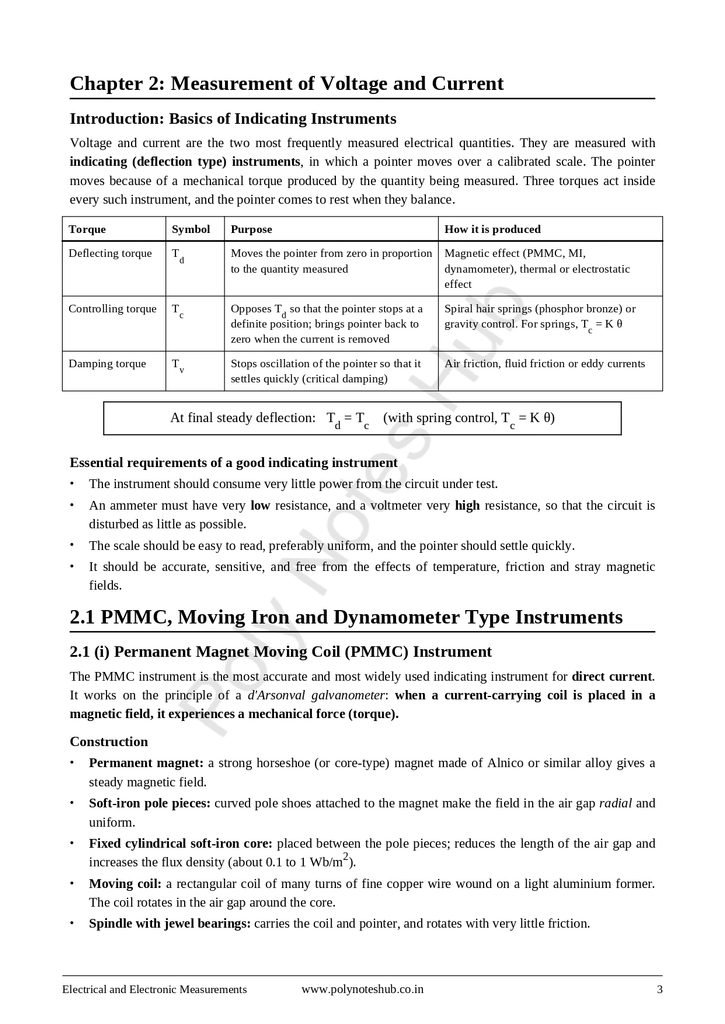
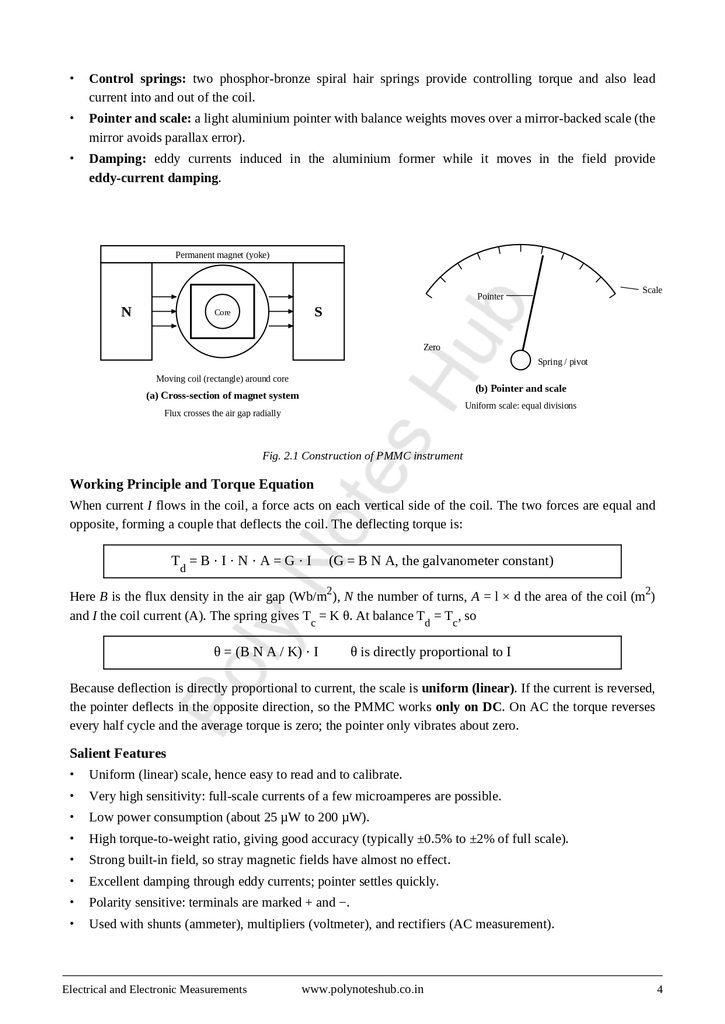
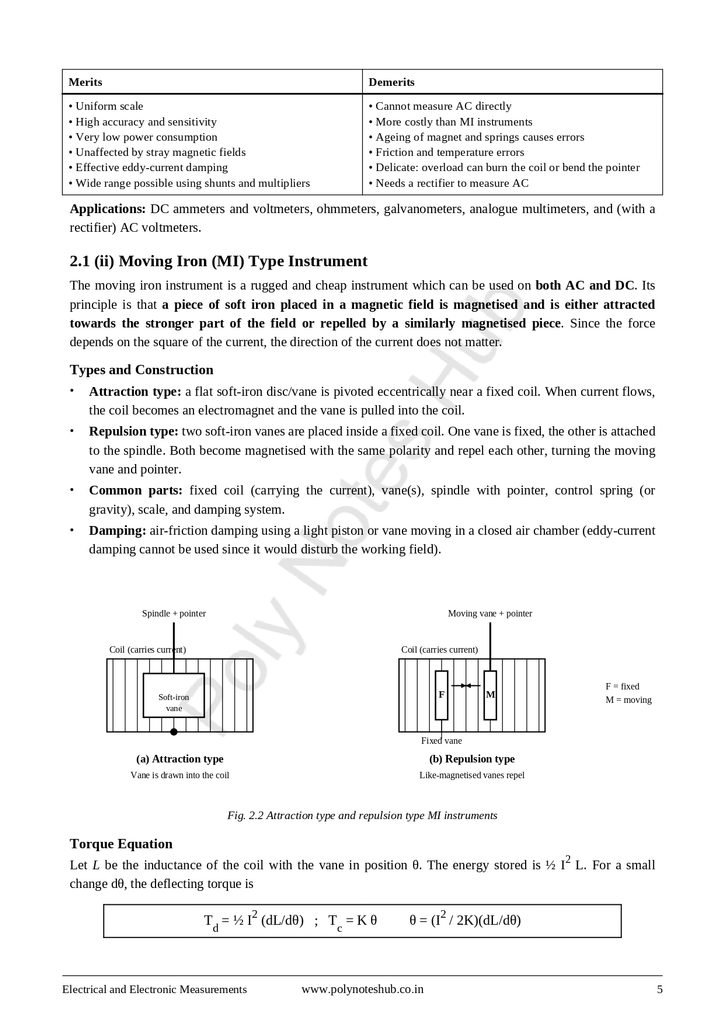
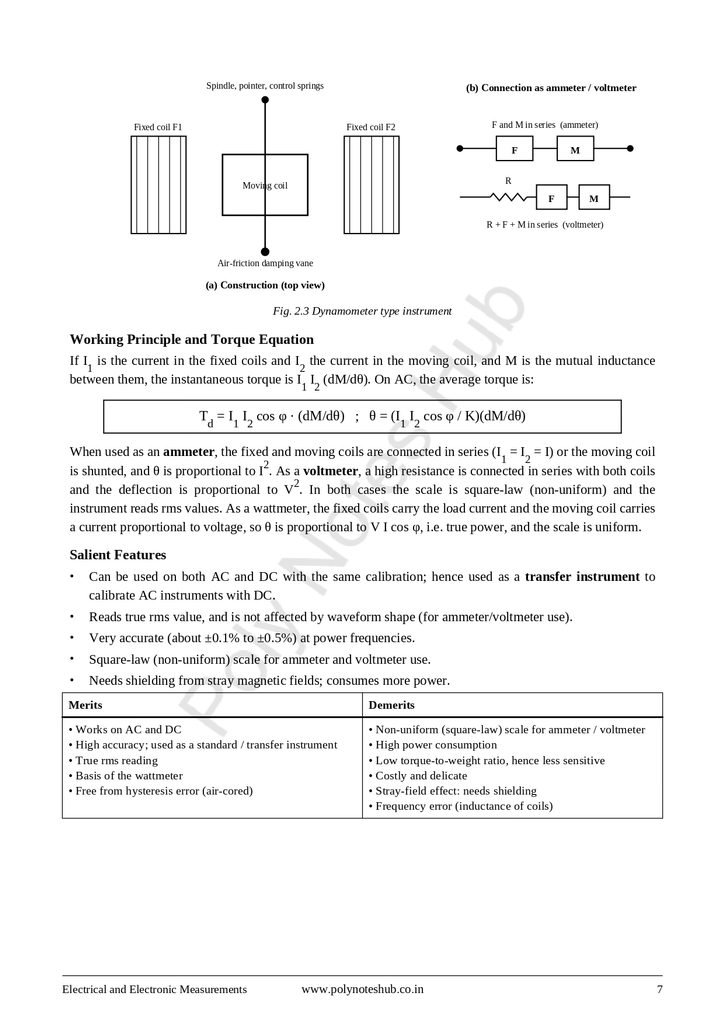
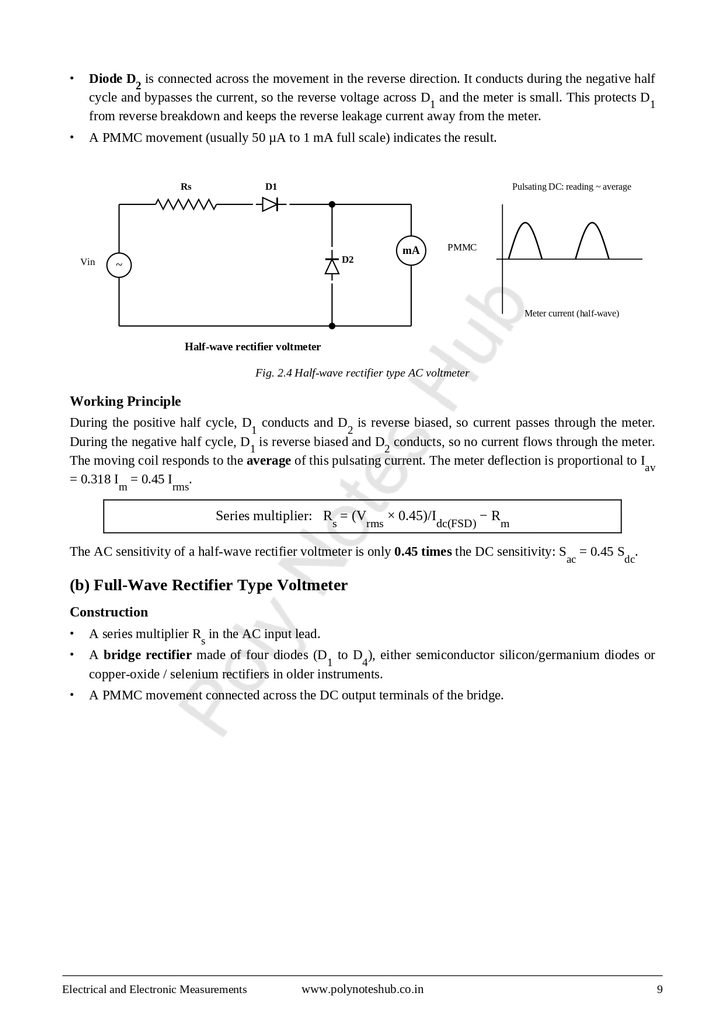
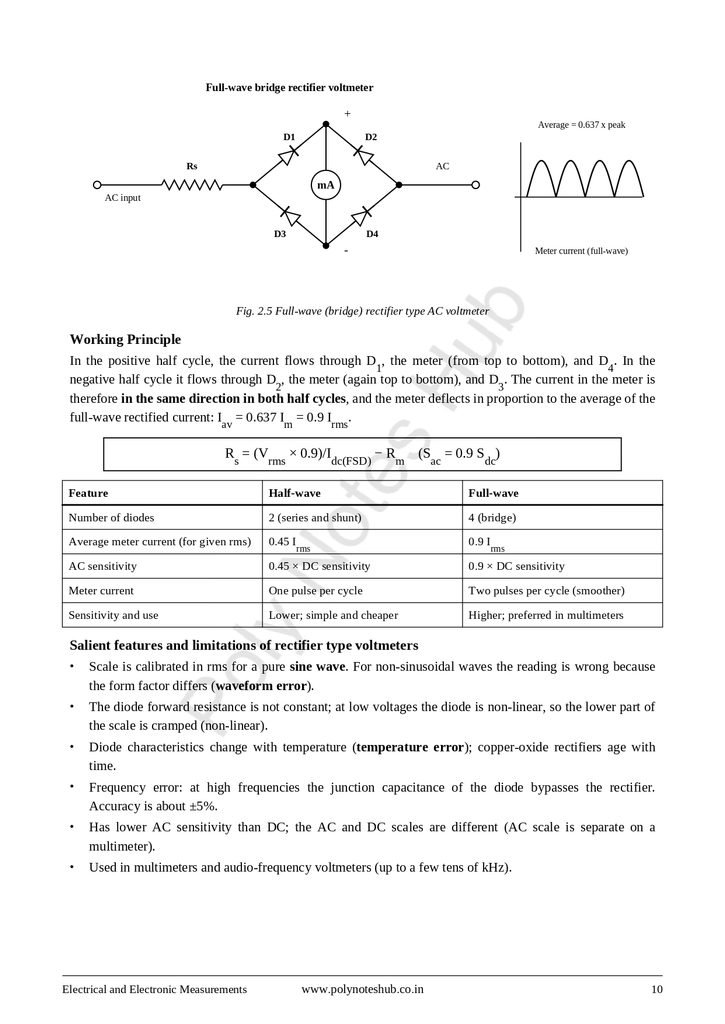
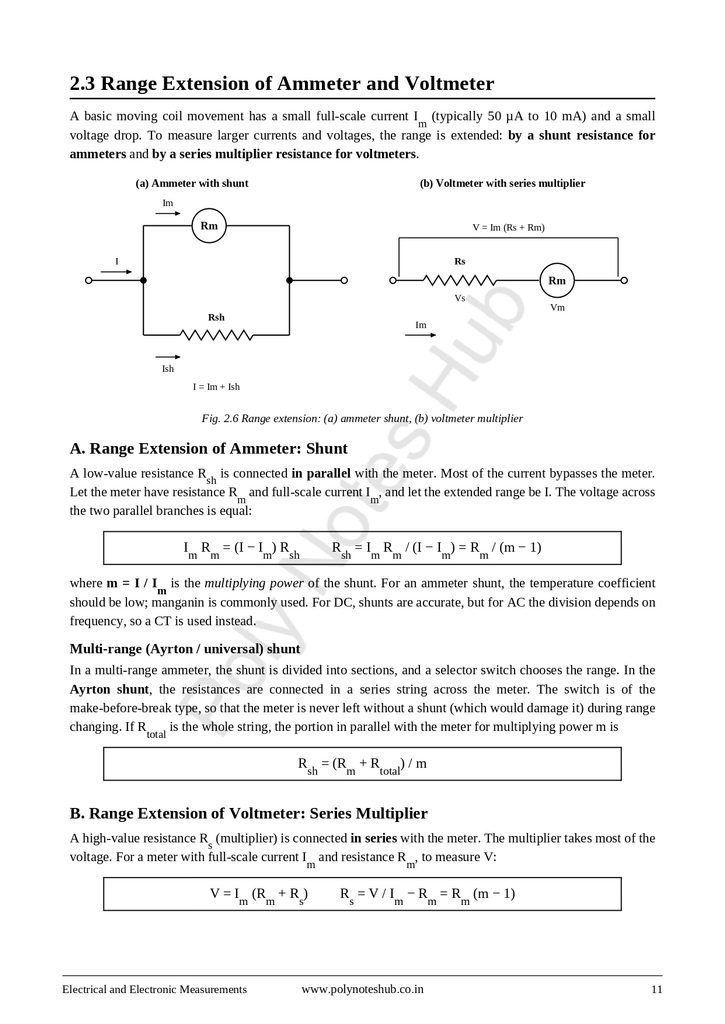
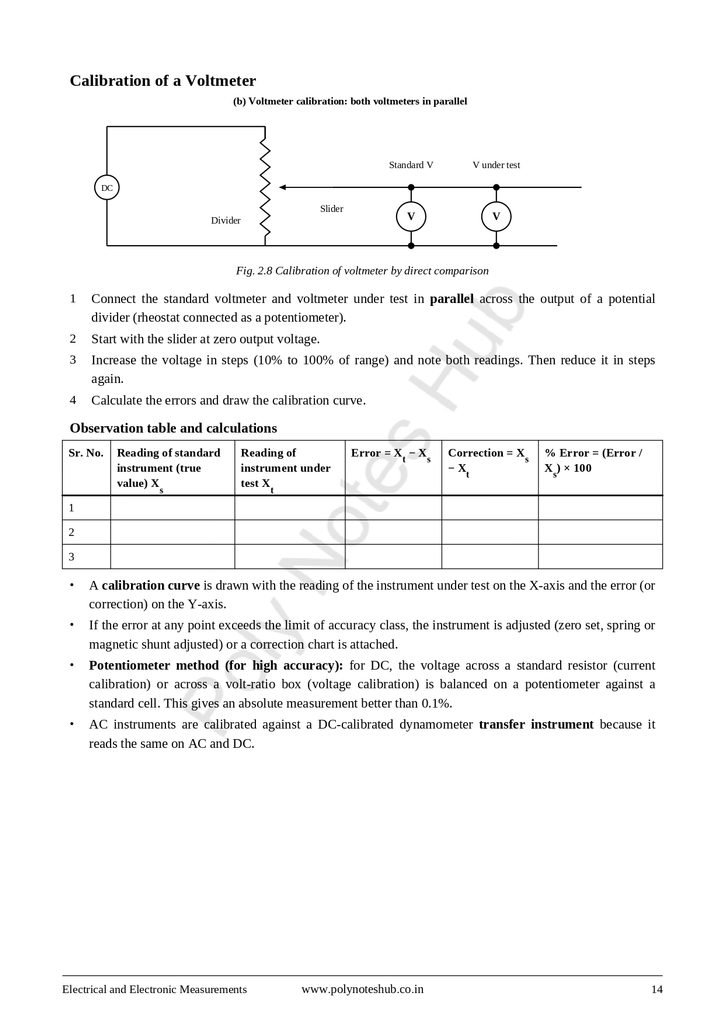
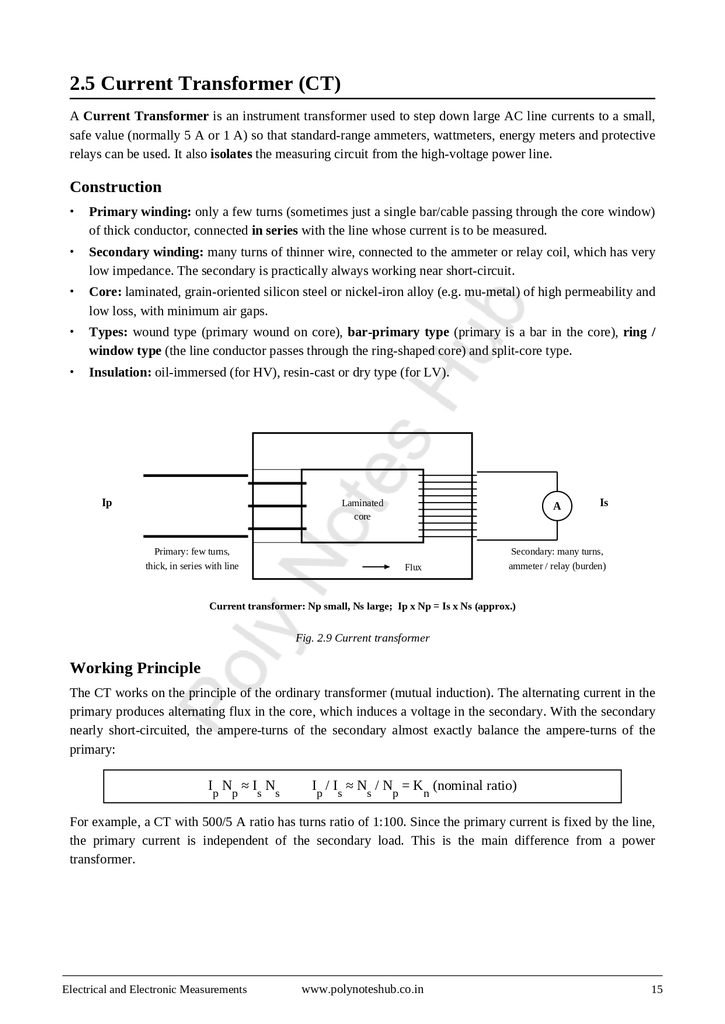
Below we have listed chapter-wise topics and the download links of PDFs,
| Chapters’ Name | Topics | Download Links |
|---|---|---|
| Unit 1: Fundamentals of Measurements | 1.1 Purpose of measurement and significance of measurement. 1.2 Definition & brief explanations of: – Range, sensitivity, true & indicated value, Errors (including limiting errors), resolution, Accuracy, precision, and instrument efficiency. 1.3 Classification of instrument systems: – 1.3.1 Null and deflection type instruments 1.3.2 Absolute and secondary instruments 1.3.3 Analog and digital instruments 1.3.4 Static and dynamic characteristics, types of errors 1.4 Calibration of instruments: Necessity and procedure 1.5 Classification of measuring instruments: Indicating, Recording and Integrating instruments. 1.5.1 Essential requirements of indicating instruments | Download Now |
| Unit 2: Measurement of voltage and current | 2.1 Construction, working principle, salient features, merits and demerits of – i) Permanent Magnet Moving Coil (PMMC) type Instrument ii) Moving Iron (MI) type Instrument iii) Dynamometer type Instrument 2.2 AC voltmeter: Rectifier type (half-wave and full-wave) – their construction, working principle, salient features. 2.3 Different Methods of range extension of Ammeter and Voltmeter & related problems. 2.4 Calibration of Ammeter and Voltmeter. 2.5 CT: Construction, working principle, different errors and their reduction, Accuracy class, Burden on CT, Specifications, Precautions in the use of CT, application. 2.6 PT: Working principle, Errors (concept only), Accuracy class, Burdens, Specifications, Precautions in the use of PT, application. 2.7 Clamp-on meter: Construction, working principle, application. | Download Now |
| Unit 3: Measurement of Electric Power | 3.1 Dynamometer type wattmeter: Construction and working principle, multiplying factor and extension of range, Different types of errors and their compensation. 3.2 Measurement of active power in a three-phase circuit for a balanced load by the one-wattmeter method, two-wattmeter method, three-wattmeter method, related problems. 3.3 Measurement of active power in a three-phase circuit for an unbalanced load. 3.4 Effect of power factor variation on wattmeter readings in the two-wattmeter method – Numerical problems. 3.5 Measurement of reactive power in a three-phase circuit. 3.6 Maximum Demand indicator – Construction and working principle. | Download Now |
| Unit 4: Measurement of Electric Energy | 4.1 Single-phase and three-phase electronic energy meter: Constructional features and working principle; different types of errors and their compensation. 4.2 Constructional features and working principle of single-phase and three-phase induction type energy meter. Different types of errors and their compensation. 4.3 Calibration of single-phase electronic energy meter using direct loading. | Download Now |
| Unit 5: Measurement of Circuit Parameter, CRO and Other Meters | 5.1 Measurement of resistance: 5.1.1 Low resistance: Kelvin’s double bridge 5.1.2 Medium Resistance: Voltmeter and ammeter method 5.1.3 High resistance: Megger 5.1.4 Ohm meter: Series, Shunt type 5.2 Measurement of inductance using Anderson bridge. 5.3 Measurement of capacitance using Schering bridge. 5.4 Earth tester: Working and connection diagram, application. 5.5 Digital Multimeter: Working principle and basic block diagram, application. 5.6 L-C-R meter: Working and basic block diagram, application. 5.7 Digital Frequency meter: Working and basic block diagram, application. 5.8 Phase sequence indicator: Working and basic block diagram, application. 5.9 Power factor meter: Single-phase and three-phase dynamometer type: Working principle and circuit diagram. 5.10 Synchroscope: Working principle and circuit diagram, application. 5.11 Tri-vector meter: Working principle, application. 5.12 Cathode Ray Oscilloscope (CRO): 5.12.1 Single beam/single trace, dual-trace CRO 5.12.2 Digital storage Oscilloscope: Basic block diagram, working. 5.12.3 Cathode ray tube, electrostatic deflection, vertical amplifier, horizontal amplifier, time base generator. 5.12.4 Measurement of voltage, amplitude, time period, frequency, phase angle using CRO. Lissajous figure. 5.12.5 Specifications of CRO. 5.13 Signal generator: Working and basic block diagram, Applications. 5.14 Function generator: Working and basic block diagram, function of symmetry, Applications. | Download Now |
Above, we have listed all the chapters’ Free Notes PDFs, equivalent to handwritten and lecture notes for Electrical and Electronics Measurement. With a single click, you can download each PDF and start preparing.
📌 Also, you can visit our website www.polynoteshub.co.in for more such types of notes on Electrical Engineering or EE