

In this note, we are going to know about the Inverse Square Law of Illumination. Welcome to Poly Notes Hub, a leading destination of engineering notes for diploma and degree engineering students.
Author Name: Arun Paul.
Inverse Square Law of Illumination
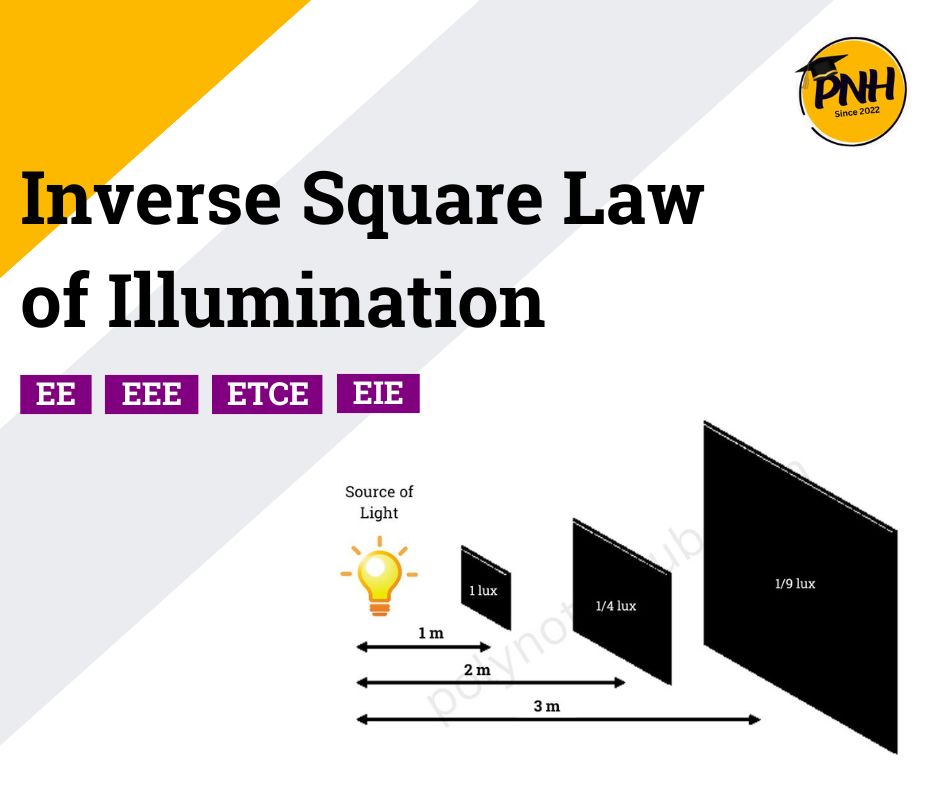
According to the Inverse Square Law of illumination, the intensity of light or illumination from a point source reduces as the square of the distance from the source increases. In other words, increasing the distance from a light source reduces the illumination to one-fourth of its original intensity.
I∝(1/d2)
where:
- I = intensity of illumination.
- d = distance from the light source.

Practical Application of Inverse Square Law
- In architectural and stage lighting, this law aids in the placing of lights to reach desired illumination levels.
- Photographers utilize this equation to adjust light sources for optimal exposure and effects.
- Calculates the required light source distances and intensities to ensure appropriate lighting in places such as streets and parking lots.