
In this note, we are going to learn the Definition of Pressure, Classification of pressure, units, and Their Relations. Welcome to Poly Notes Hub, a leading destination for diploma and polytechnic engineering notes.
Author Name: Arun Paul.
Definition of Pressure
Pressure is defined as the force acting per unit area on a surface.
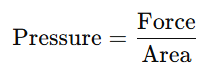
It means when a force is applied on a smaller area, pressure becomes higher.
Classification of Pressure
Pressure is mainly classified into the following types:
- Atmospheric Pressure
- The pressure exerted by the weight of air (atmosphere) on the earth’s surface.
- Standard atmospheric pressure = 1 atm
- Absolute Pressure
- The total pressure measured from absolute vacuum (zero pressure reference).
- Absolute Pressure = Atmospheric Pressure + Gauge Pressure
- Gauge Pressure
- The pressure measured above atmospheric pressure.
- Most pressure measuring instruments show gauge pressure.
- Vacuum Pressure
- Pressure below atmospheric pressure.
- Also called negative gauge pressure.
- Static Pressure
- Pressure exerted by a fluid at rest.
- Dynamic Pressure
- Pressure due to motion of fluid.
Units of Pressure
| Unit | Symbol | Description |
|---|---|---|
| Pascal | Pa | SI unit of pressure |
| Kilopascal | kPa | 1000 Pa |
| Bar | bar | Common engineering unit |
| Atmosphere | atm | Standard atmospheric pressure |
| Torr / mmHg | Torr | Used in vacuum measurement |
Relation Among Different Units of Pressure
- 1 atm = 101325 Pa
- 1 bar = 100000 Pa
- 1 atm = 1.013 bar
- 1 atm = 760 mmHg (Torr)
- 1 bar = 0.987 atm
- 1 kPa = 1000 Pa